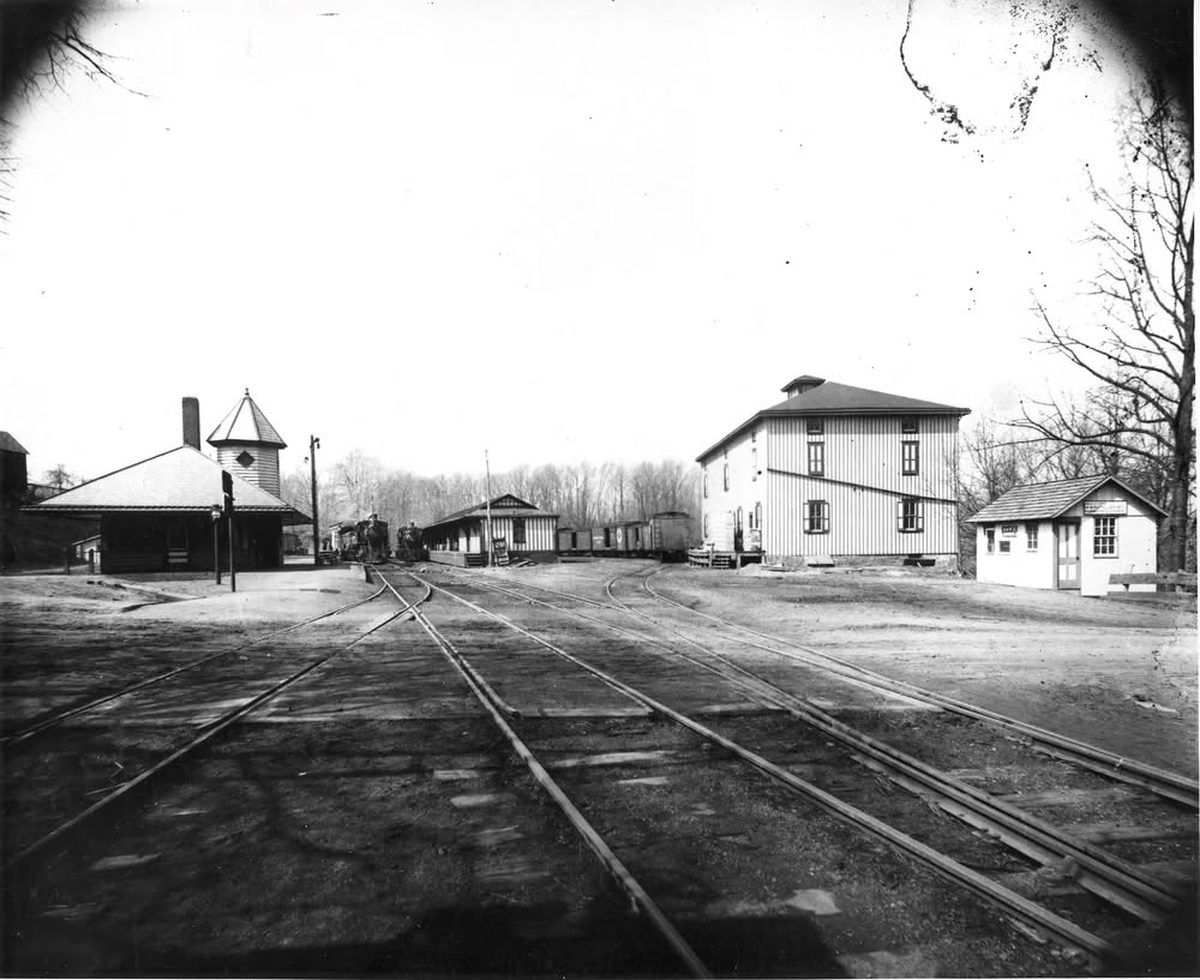
If you were standing here a hundred years ago, you would have heard it before you saw it. The whistle of a train coming up the spur. The thump of wooden crates dragged across the loading dock. The shouts of men working the long platform. This was the busiest building in Mullica Hill. The South Jersey countryside grew food, and this is where the food left town. By 1888 the South Glassboro to Mullica Hill rail line ran straight up to the warehouse and connected this small village to a much wider world. Boxcars pulled out of here filled with sweet potatoes, asparagus, corn, and tomatoes, on schedules that beat a horse-drawn wagon by days. At its peak the building held nearly a million bushels of sweet potatoes at a time. When trucks began to replace rail freight, a Mullica Hill firm called R. A. Byrnes picked up the same work, packing asparagus under its own label and running fleets up and down the seaboard from offices in Mullica Hill, Swedesboro, and Chelsea in New York. For three generations, what was grown on the farms within twenty miles of here moved out through this dock to kitchens from New England to Washington, D.C.
The clearest proof of how visible this place had become came on the morning of May 17, 1922. In a field on Wolfert Station Road just outside the village, a Fokker F.III monoplane sat with eight hundred pounds of asparagus strapped down behind the cockpit, cut a few hours earlier from local fields. The pilot was William N. de Wald, a former U.S. Air Mail pilot. His passenger was Captain W. G. Schauffler Jr. What they were attempting had never been done. No one had ever flown produce on a commercial demonstration like this. They were going to fly Mullica Hill asparagus to Massachusetts and put it on a dinner table the same day, and they were doing it in front of the entire country's newspapers.
It nearly worked. Somewhere over Massachusetts the plane lost its bearings. Period accounts describe men on the ground at Framingham trying to signal the pilot to a safe landing as the monoplane came in late. By the time the asparagus arrived, the day was largely past. But the flight made the papers, from Philadelphia to Boston to New York, and put Mullica Hill in a national conversation about what fresh produce and modern transportation could do. Today the same building houses Naples at the Warehouse, an Italian restaurant run by the Romeo family with what locals call the village's first full bar since Prohibition. The work has changed. The building has held its place at the center of town.