
North Main Extension
St. Stephen's Episcopal Church
1853 · 51 North Main Street
Start anywhere. Follow the next-stop button to keep exploring.
When this congregation built its new church, it had to bring its dead along. What the gravediggers found became a local sensation.
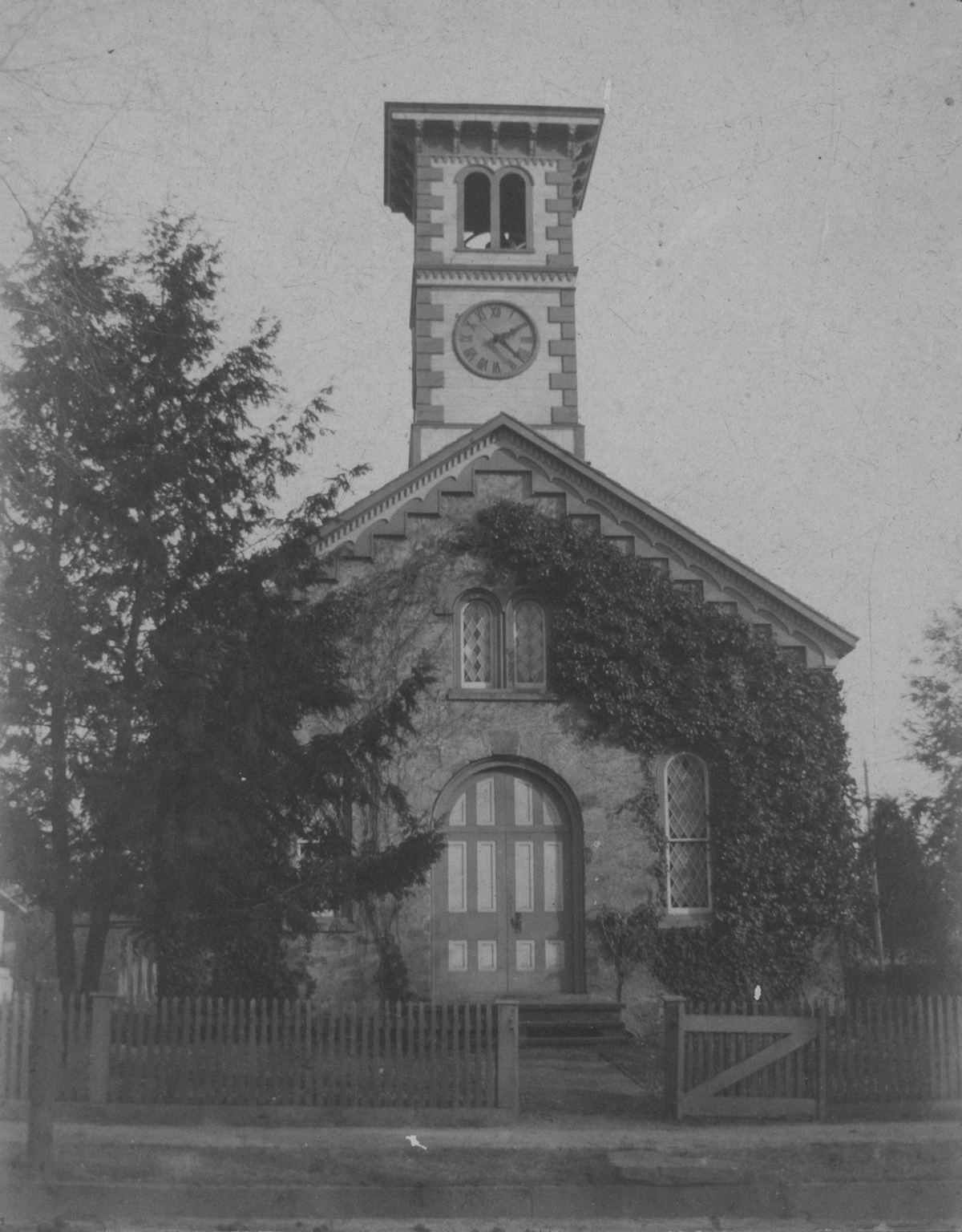
Episcopal worship in Mullica Hill began, by tradition, around 1800 in the gristmill down by the creek, with a layman named Joseph Chatham reading the services. A proper church followed in 1813 at South Main and East Church Streets, the township's second house of worship.
When the congregation left that corner for this one, it moved its cemetery too. Custom put the churchyard beside the church, so the graves at the old site were opened and the burials carried up Main Street to this ground. The gravediggers made a discovery the village never forgot: several of the dead, the record says, were "in a perfect state of preservation." The old frame church, sold out of holy use, did time as a private school, ended as a piggery, and was finally pulled down.
The new church came the hard way. None of its stone is local; the parish's own history records that it was quarried in Pennsylvania, brought by barge to Mantua, and hauled here by cart. The diamond-paned windows are believed to be Glassboro work. The iron panels of the chancel, which serve today as the altar rail, are credited by parish tradition to the village's own foundry.
The cornerstone went down on April 1, 1852. The finished church was consecrated on August 30, 1853, at a cost so steep the parish had to sell its parsonage to clear the debt.
The tower is a story of its own. John Schwebel built it in 1879, with a bell cast that year by Henry McShane of Baltimore. The parish history records that the first hand to ring it, on September 11, 1879, belonged to Joseph A. Chatham. He was a descendant of the layman who had read those first services in the gristmill.
The next year the whole town, of every denomination, subscribed the money that put the clock in the tower. That detail matters: the clock was the town's, not just the parish's. It has been the town clock ever since, and the little law office next door at Stop N4 has kept it company for well over a century.
The 1879 bell has come to rest behind the church.
This is the far point of the North Main extension. From here, walk back south along this side of Main Street, past the old jail corner at Waypoint F, and rejoin the core loop at Stop 9, The Old Mill, by the traffic light where the creek and the village center are waiting.
The Ghost Walk passes this churchyard
The Society's Ghost Walk walks the village's eeriest folklore by candlelight each October, and it has sold out every year it has run.