
The Bridge Under the Bridge
Raccoon Creek crossing
Start anywhere. Follow the next-stop button to keep exploring.
Beneath this crossing lie stone piers left by an earlier bridge.
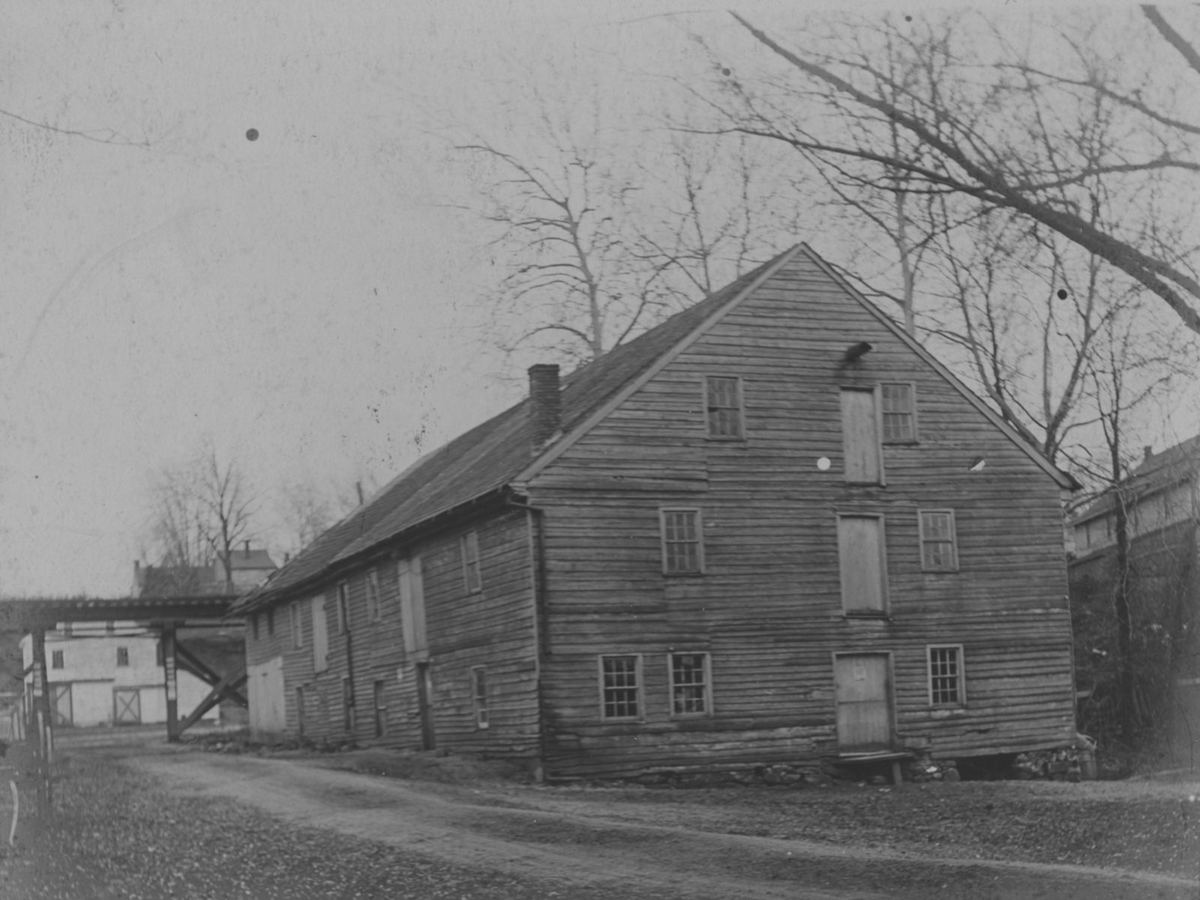
A stone arch carried this crossing for over a century, and every photographer in the village seems to have loved it. The National Register survey adds the detail that explains the traffic: this was historically the only bridge over Raccoon Creek east of Swedesboro. Farm wagons, stages, and eventually automobiles had one way over the water, and this was it. The paving of Bridgeton Pike in 1919 and 1920 ended the arch. A modern span took its place, and rather than dig the old stone piers out, the roadbuilders entombed them where they stood, beneath the new deck.
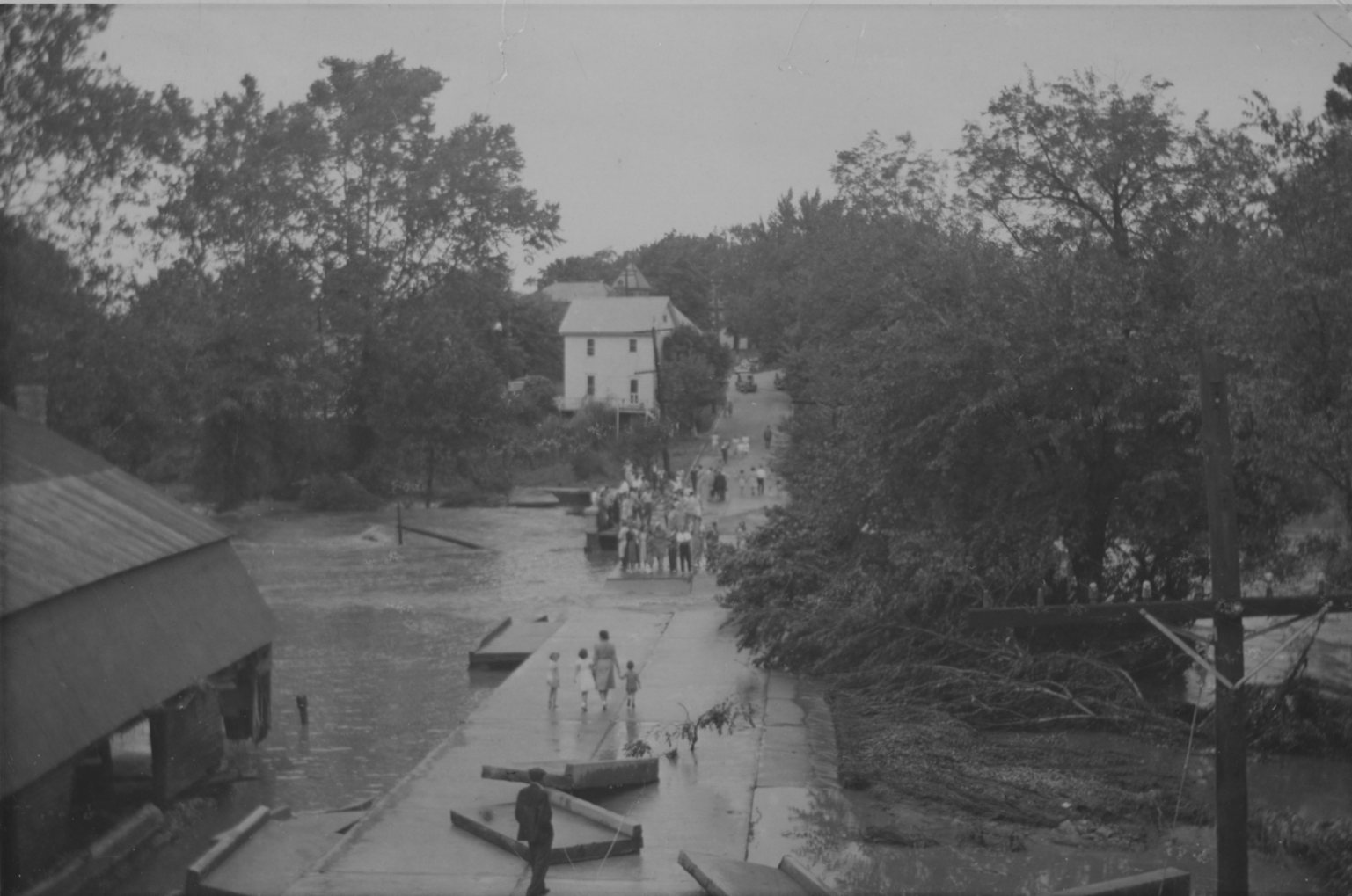
The creek, for its part, has never fully accepted the arrangement. On September 1, 1940, a tropical storm stalled over South Jersey and put 22.4 inches of rain on nearby Ewan in a single day. Raccoon Creek took out its dams one after another, dropped the high bridge here at Main Street, and erased the crossings at Mill Road and Mullica Hill Road. The gristmill beside the crossing, doing duty by then as the town waterworks, came out of the water a wreck and had to be rebuilt. Federal flood officials later rated the storm a 500-year event.
The mill is the crossing's older story. The National Register file traces milling at this water back to a 1750 tax listing, and probably to about 1741, decades before the 1809 building the photographs remember. And the 1883 county history preserves the crossing's strangest tradition: a small Revolutionary War skirmish said to have been fought at Mullica Hill, in which exactly one man was killed, and he was buried near the grist mill. If the tradition is true, the village's only battlefield casualty rests somewhere near where you stand.
Cross carefully. This modest stream powered the mills that built the village, was said in the settlement era to carry small boats, and in one September day in 1940 redrew the town's map.