
Mullica Hill Historic Walking Tour
Wolf Funeral Home
c. 1810 · 30 South Main Street
Start anywhere. Follow the next-stop button to keep exploring.
On New Year's Day 1889, James M. Wolf had a handbill printed. Funerals attended with promptness and delicacy. Satisfaction guaranteed to all. And one line you have to read twice: "We have also the Patent Corpse Preserver."
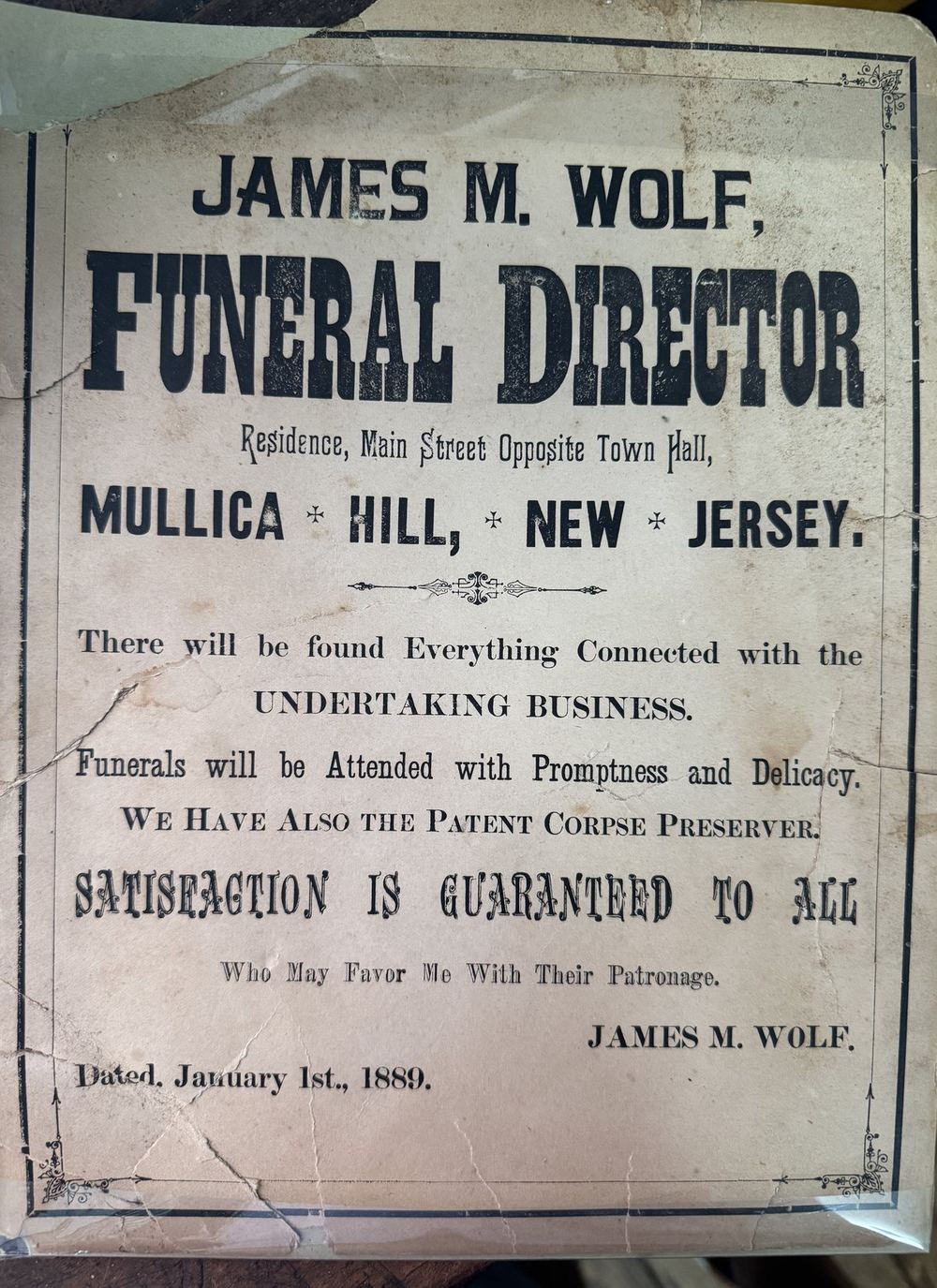
The handbill gives his address as Main Street opposite the Town Hall, the building where this tour starts, and it tells you what death looked like in a village this size in 1889. A person died in their own bed, was washed and dressed by their own family, and lay in the front parlor while the neighbors came through the door. The undertaker's job was to make that possible in July as well as January.
The corpse preserver was a patented ice box for the parlor: an insulated cabinet with an ice chamber above the body, a drain below, and often a small pane of glass over the face. A Morristown, New Jersey inventor had patented one version in 1864, glass window and all. Wolf owned one and wanted the village to know it.
Six years earlier, when the county history counted the village trades, it found a harness maker, two tin stores, a druggist and a cigar shop, and no undertaker. His handbill was a promise: your family could keep its dead at home, decently, for as long as the funeral took.
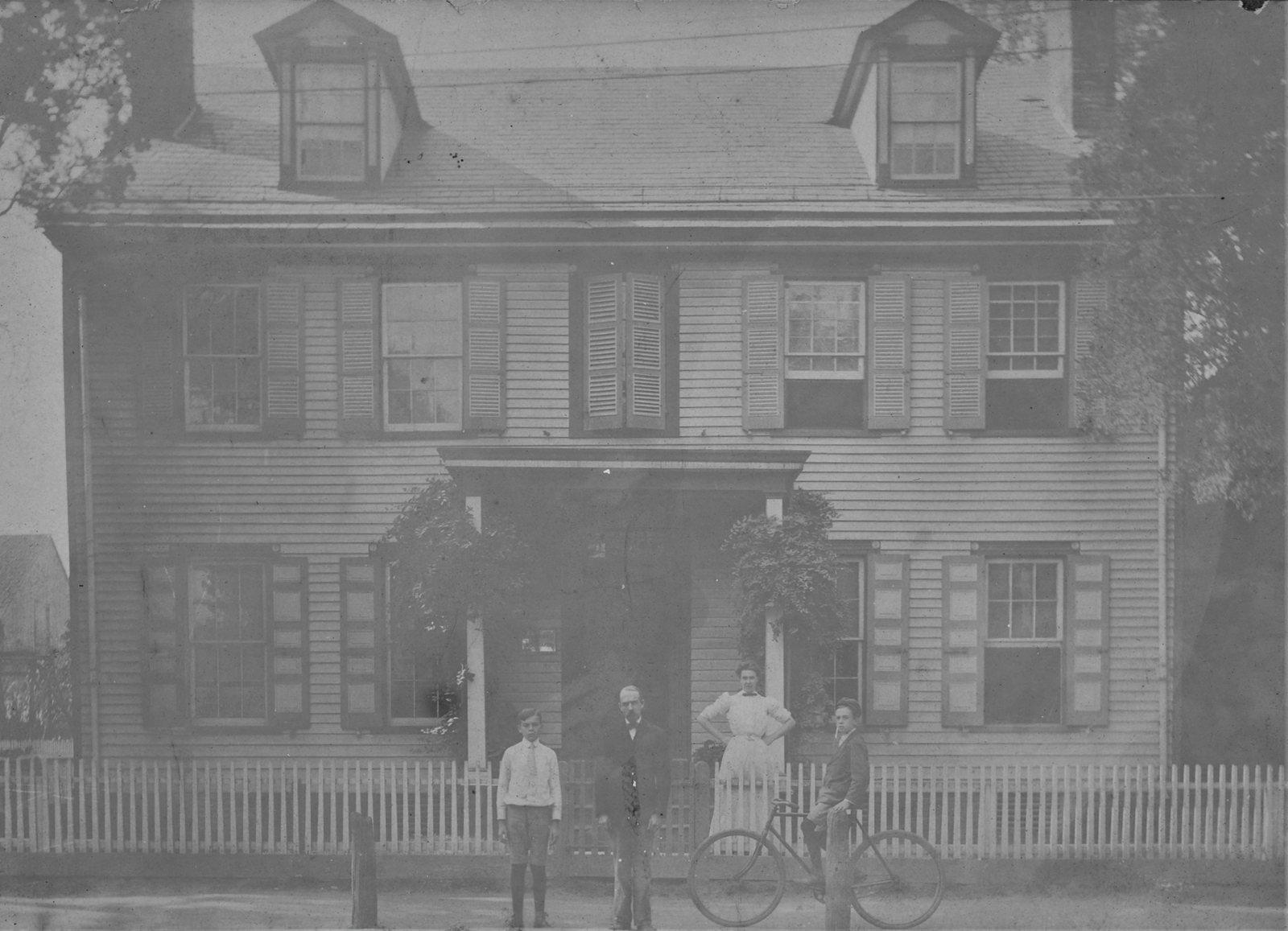
Then the promise turned around. By 1907 the county paper was calling him Funeral Director James M. Wolf, and by 1912 the dead were coming to him.
That August a twenty-one-year-old farmhand, two weeks into a job with Asa Coles, took a team out toward the gravel pits on a Monday morning. A passing motorcycle spooked the horses, he was thrown into the road, and he died soon after. Nobody could learn whether he had any family. His body went, the paper reported, "to the rooms of Undertaker J. M. Wolf," and he was buried the next day in the Strangers' Burying Ground on Main Street. A stranger with no parlor to lie in still got a room, a funeral, and a grave.
Where those rooms stood in 1912, the paper does not say. The Society's account is that Wolf bought this house as the business grew, and that the building out back held the horses and the hearse, and in time the motor hearse that replaced them. The same account holds that the dead were held and prepared in what is now the office of Coles' Garage.
The house was old long before he came to it. The historic district survey dates it to about 1810 and calls it the Coles House: seven original fireplaces, and a smoke room up in the attic with the hooks still in it.
The paper caught a piece of the operation in March 1907: "Funeral director James M. Wolf has purchased a new horse."
Mrs. Wolf was in the business too. In August 1911, with her husband called to a dying sister's bedside in Hightstown, the Mullica Hill column reported that "Mrs. Wolf took charge of the funeral." The village noted it and moved on.
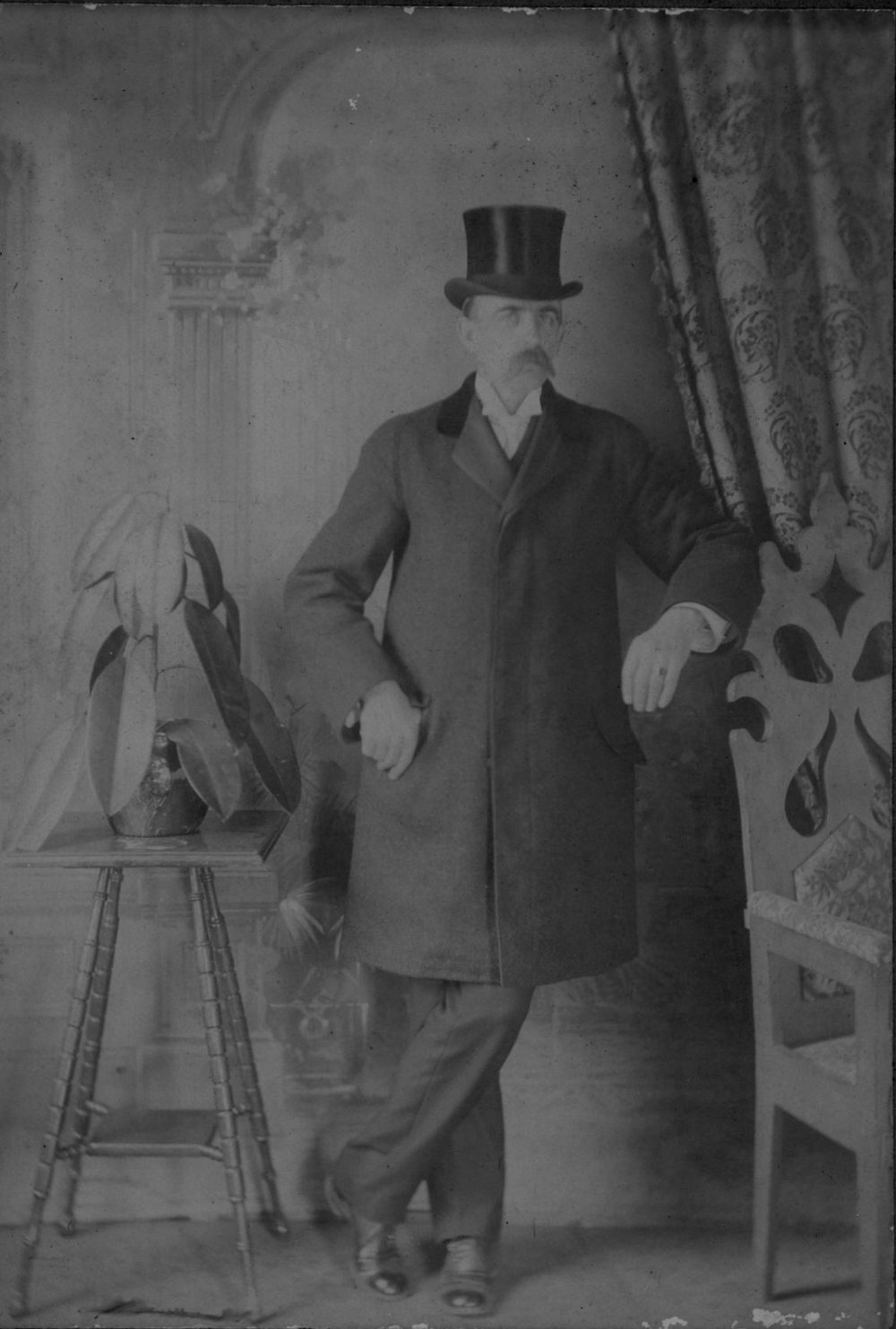
Wolf was the kind of villager whose name turns up everywhere once you start looking. When Mullica Hill organized the Harmony Fire Company in January 1904, the first election made him vice president and put him on the committee sent out to raise money for equipment. He sat on the county grand jury in 1909.
At home there were four children, Marie, Delma, Charles and Elvin, and the paper still found them all at their parents' table for Thanksgiving dinner in 1924, grown. The Society holds the funeral home's own burial registers, the village's dead recorded one funeral at a time.
The trade Wolf advertised in 1889 has kept the old word for the room it replaced. We still call the place a funeral parlor.
Did You Know
The 1991 historic district survey lists the little store next door at 28 South Main as the "Wolfe Store," spelled with an e that James never used on his own handbill.