Mullica Hill Historic Walking Tour
The Warehouse
c. 1890 · 2 South Main Street
Start anywhere. Follow the next-stop button to keep exploring.
Sweet potatoes, asparagus, corn, and tomatoes left Mullica Hill through this warehouse. Its loading dock connected local farms with markets far beyond the village.
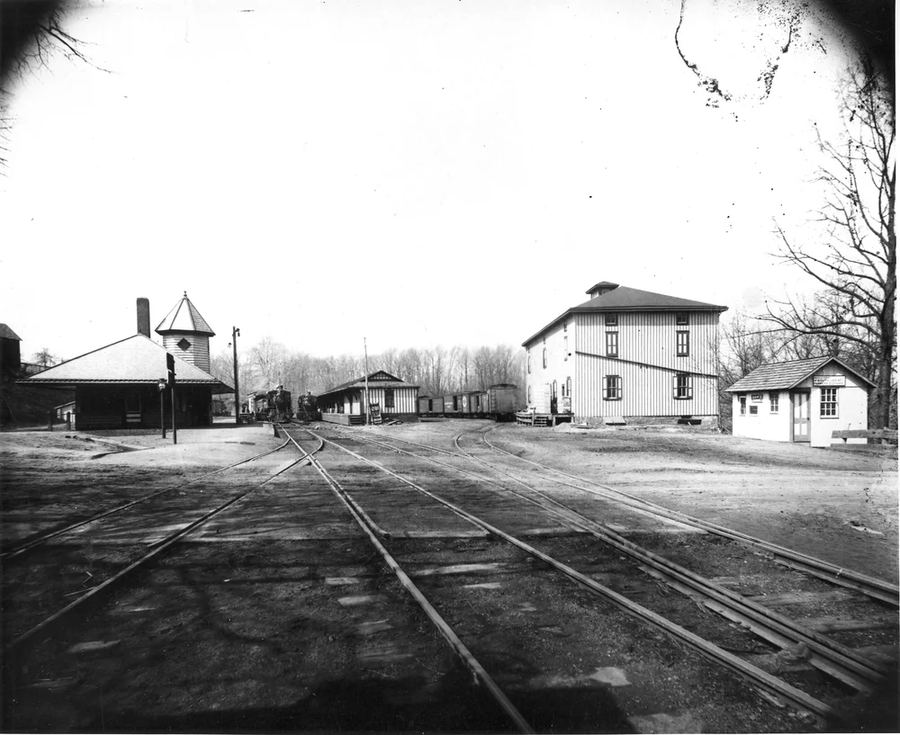
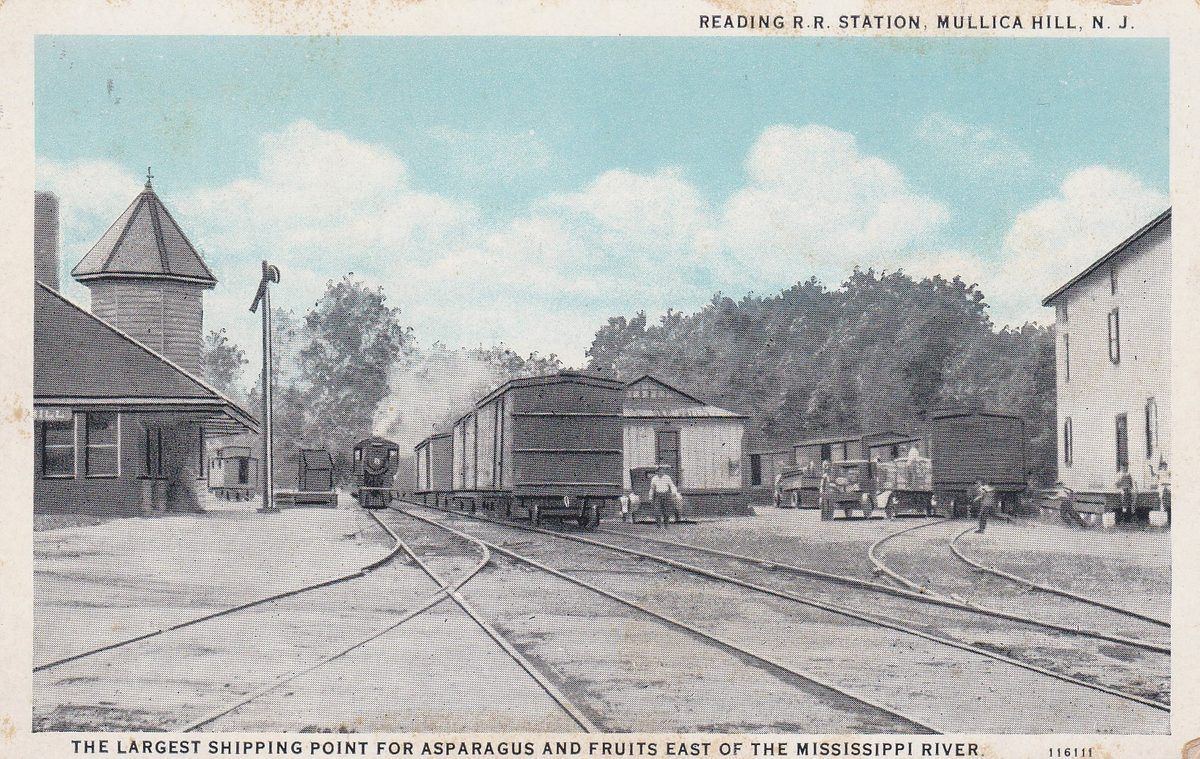
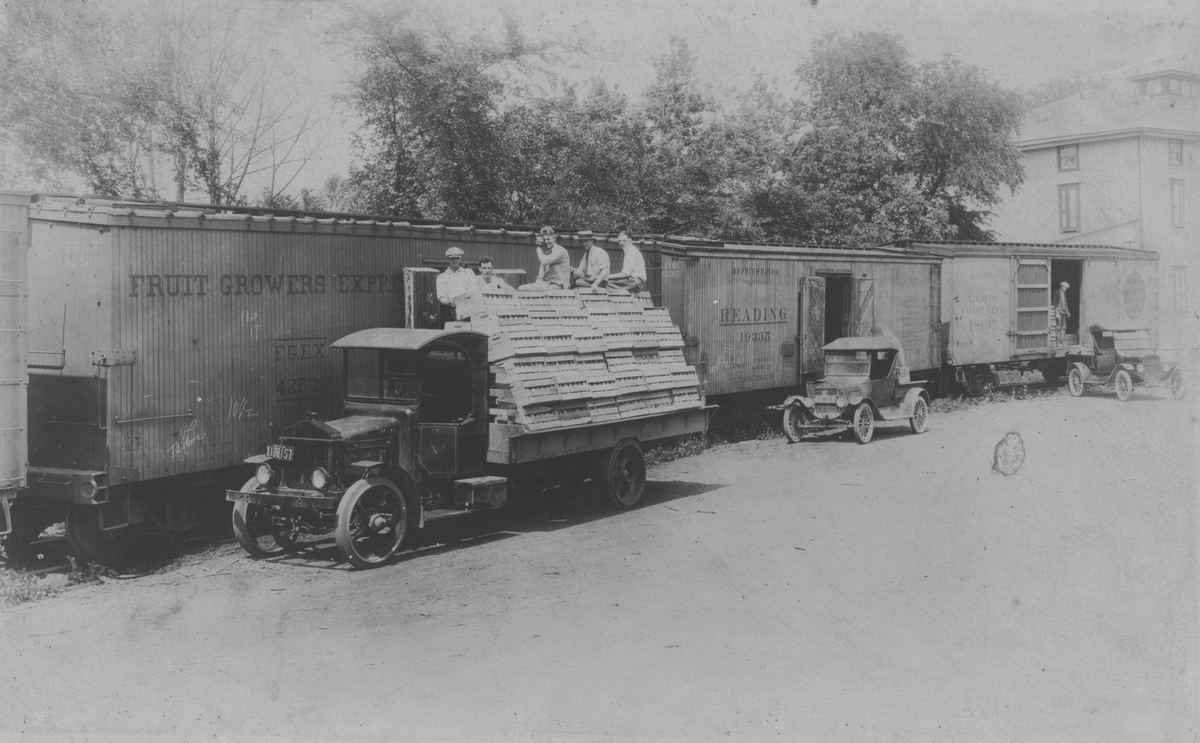
This was the busiest building in Mullica Hill. The South Jersey countryside grew food, and this is where the food left town. The South Glassboro to Mullica Hill rail line reached the village in 1889 and ran straight up to the warehouse, connecting this small village to a much wider world. Boxcars pulled out of here filled with sweet potatoes, asparagus, corn, and tomatoes, on schedules that beat a horse-drawn wagon by days.
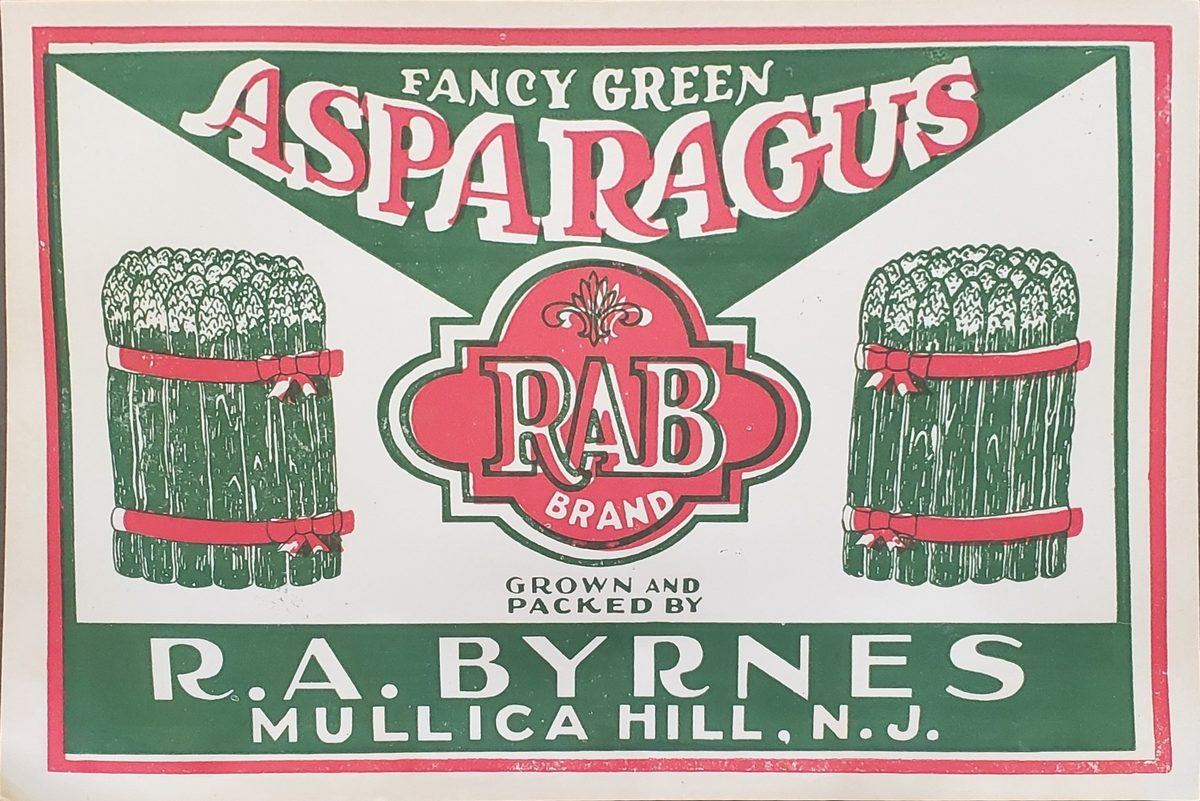
The historic district nomination describes a capacity of nearly a million bushels of sweet potatoes. When trucks began to replace rail freight, a Mullica Hill firm called R. A. Byrnes picked up the same work, packing asparagus under its own label and running fleets up and down the seaboard from offices in Mullica Hill, Swedesboro, and Chelsea in New York. For three generations, what was grown on the farms within twenty miles of here moved out through this dock to kitchens from New England to Washington, D.C.
The clearest proof of how visible this place had become came on the morning of May 17, 1922. In a field just outside the village, a Fokker F.III monoplane sat with eight hundred pounds of asparagus strapped down behind the cockpit, cut a few hours earlier from local fields. The pilot was William N. de Wald, a former U.S. Air Mail pilot. His passenger was Captain W. G. Schauffler Jr. They planned a demonstration of how quickly fresh produce could travel by air: Mullica Hill asparagus flown to Massachusetts and set on a dinner table the same day, with the newspapers watching.
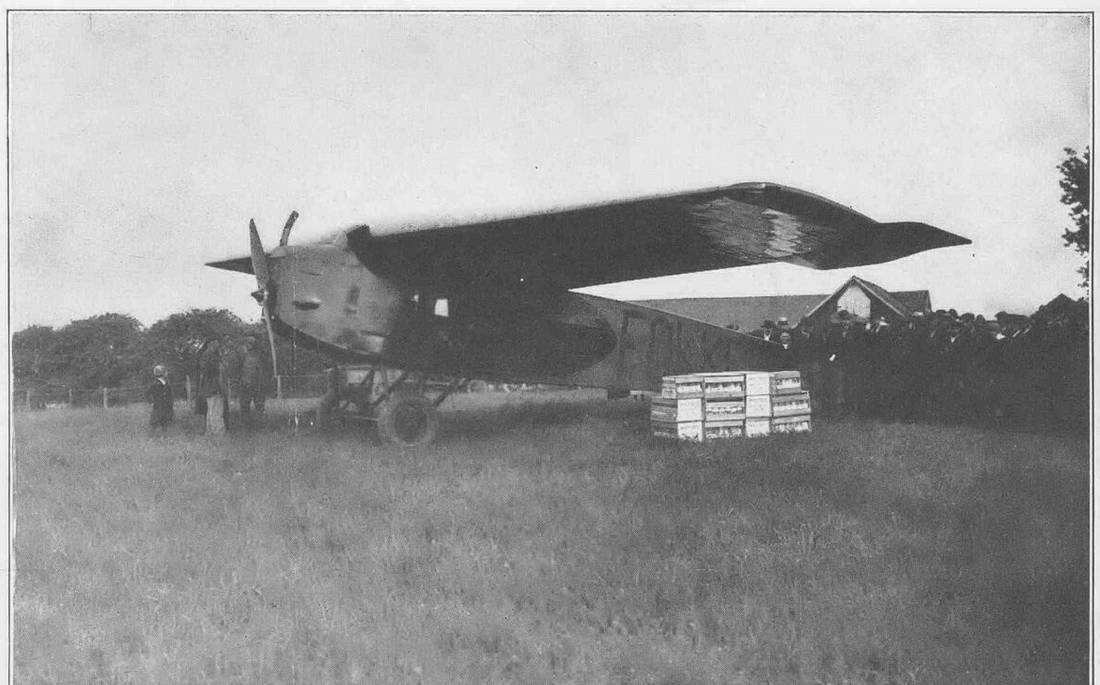
The flight arrived late. Somewhere over Massachusetts the plane lost its bearings. Period accounts describe men on the ground at Framingham trying to signal the pilot to a safe landing as the monoplane came in late. By the time the asparagus arrived, the day was largely past. But the flight made the papers, from Philadelphia to Boston to New York, and put Mullica Hill in a national conversation about what fresh produce and modern transportation could do.
Today the same building houses Naples at the Warehouse, an Italian restaurant run by the Romeo family with what locals call the village's first full bar since Prohibition. The work has changed. The building has held its place at the center of town.
Did You Know
Bert Acosta, who later flew on the 1927 transatlantic Byrd flight, was named in Massachusetts advance publicity as the asparagus flight's pilot. William N. de Wald made the flight instead; the reason for the change has not been established.
Around You Now
Naples at the Warehouse, the Romeo family's Italian restaurant, serves inside this very building.
Want to take the longer walk?
Both routes come back together at Stop 9, The Old Mill, and continue toward the museum.
Take the longer walk
Explore North Main's bank robbery story, the town clock, and more before rejoining the main route.
Stay on the shorter walk
Cross at the traffic light to Stop 9, The Old Mill, and continue the main route toward the Foundry.
Asparagus Festival & Battle of the Chefs
The town's asparagus story is celebrated at the Society's Asparagus Festival and Battle of the Chefs, on the third Saturday in May, returning in 2027.